

Google announced a new policy update on August 28th. Starting August 30th, 2026, manual actions applied under Google’s Site Reputation Policy will have a different effect for those searching in the Europe Economic Area (EEA) than outside of it.
.
What is Google’s Site Reputation Policy?
Google first released the Site Reputation Policy in March 2024 alongside a core algorithm update to target websites practising Parasite SEO practices.
Google’s Site Reputation Policy penalises websites publishing third-party, low quality content solely to benefit from the host website’s already established trust signals.
Google further clarifies that simply publishing 3rd party content on a website isn’t site reputation abuse by itself.
Google also shares some examples that are NOT considered inconsistent with the site reputation policy:
- Wire service or press release service sites
- News publications that have syndicated news content from other news publications
- Sites designed to allow user-generated content, such as a forum website or comment sections
- Columns, opinion pieces, articles, and other work of an editorial nature
- Third-party content (for example, “advertorial” or “native advertising” type pages) where the purpose is to share content directly to readers (such as through promotion within the publication itself), rather than hosting the content to manipulate search rankings
- Using affiliate links throughout a page, with links treated appropriately, or embedding third-party ad units throughout a page
.
Latest Google’s Site Reputation Policy Update [ w.e.f August 30th 2026 ]
As per this new update, for users inside the EEA, the impact of manual actions won’t apply. However, Google does clarify that the affected section of the site may be separated in their systems and can rank independently from the rest of the site.
This is particularly an important piece of Google Search update for sites practising parasite SEO.
.
What is Parasite SEO?
Parasite SEO is publishing low quality content on other high-authority websites and platforms such as LinkedIn, Reddit, Medium, Trustpilot, news websites, etc., to earn domain authority and rankings quickly.
Google classifies some aggressive forms of parasite SEO practices as site reputation abuse under its Site Reputation Policy and may issue a manual action penalty to both the parties, primarily the host site.
.
What is Google’s Manual Action Penalty?
Google issues a manual action penalty to websites that do not follow the site reputation policy or are involved in other forms of Black Hat SEO practices such as Back button hijacking, site abused with third-party spam, user-generated spam, structured data issue, unnatural links to your site, unnatural links from your site, etc.
Website owners can check if their site has received a manual action penalty from Google in their Google Search Console Manual Actions report present under Security and Manual Actions tab.
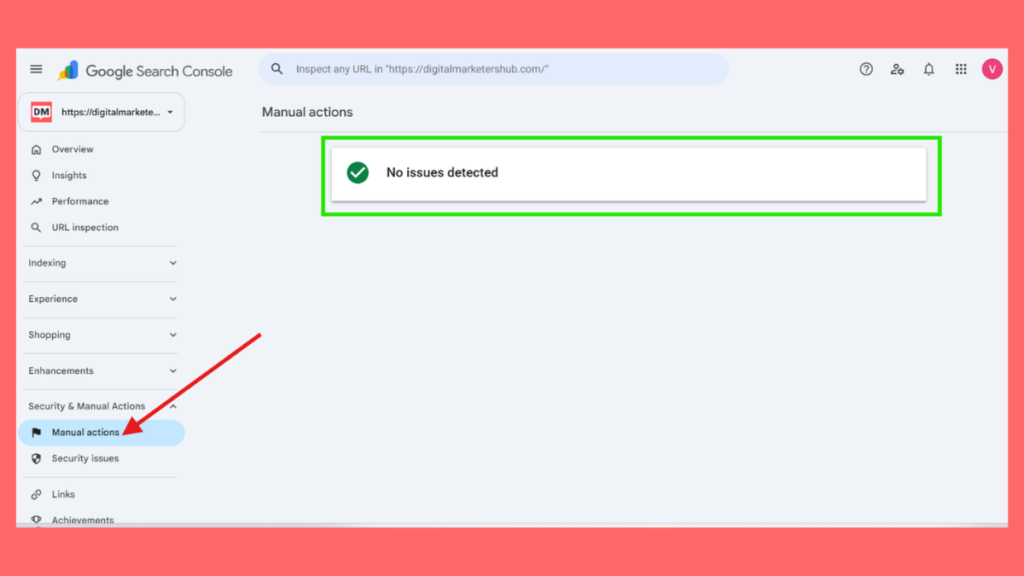
If a site has a manual action, some or all of that site will not be shown in Google search results.
.
How does Google’s Manual Action Effect Change as per the Latest Site Reputation Policy Update?
Outside the EEA, nothing changes. Sites involved in site reputation abuse will continue to get hit by manual action penalty which can affect the portion of the site involved in abuse.
Inside the EEA, the direct impact of that manual action will no longer apply to search results. Instead, Google may separate the affected section from the rest of the website and allow it to rank independently over time. Importantly, the policy itself still exists, and site owners can still receive notifications about manual actions in Search Console.
.
Conclusion
The biggest takeaway probably is that publishers and website owners need to have more control over third-party content.
Publishing third-party content isn’t a problem by itself, as long as it matches the overall standard quality of the host site and is relevant to the host site with clear acknowledgment of ownership of the content. Posting identical or nearly-identical content on multiple sites is also something website owners and publishers need to be more aware of.
If you’re unsure whether your website’s content or SEO practices could put you at risk of a Google policy violation, a professional SEO audit service and review can help identify potential issues before they affect your search visibility.
Sources:
- Google Search Central Blog – Update on Site Reputation Abuse Policy
- Google Developers – Site Reputation Abuse Policy
- Google Search Console Help – Manual Action Penalty
Recent Community Post: